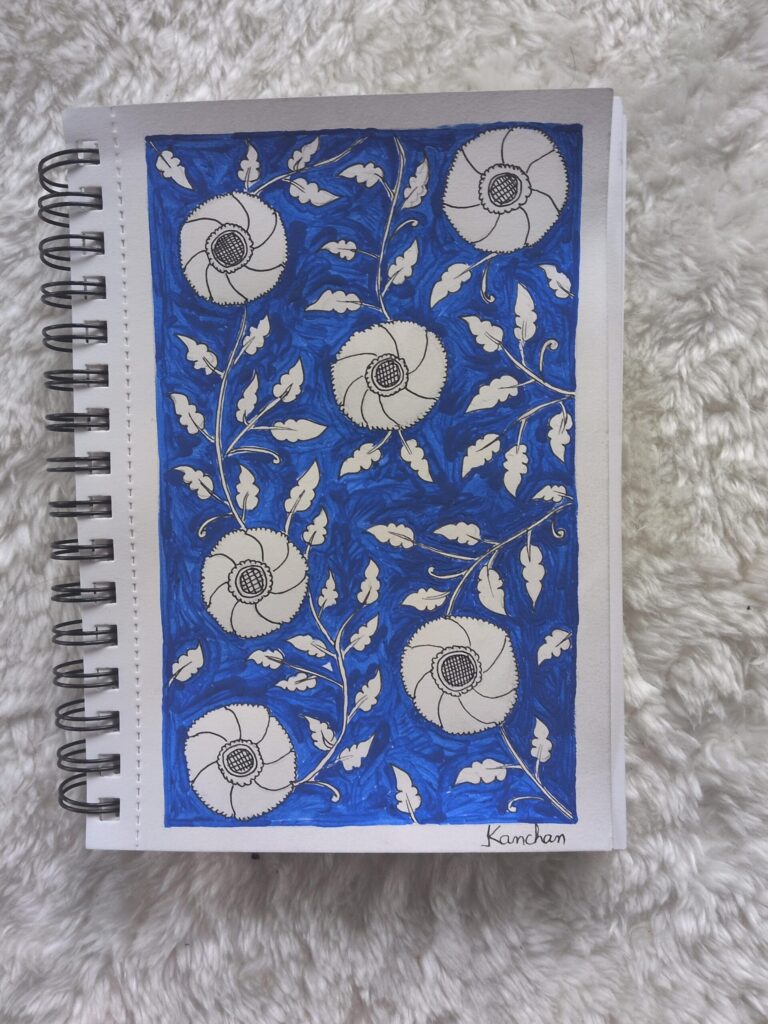
Kalamkari is an ancient traditional textile art from Andhra Pradesh, India. It heavily features religious and mythological themes from the Ramayana and Mahabharata traditionally displayed as temple hanging.
Kalamkari is an ancient traditional textile art from Andhra Pradesh, India. It heavily features religious and mythological themes from the Ramayana and Mahabharata traditionally displayed as temple hanging.
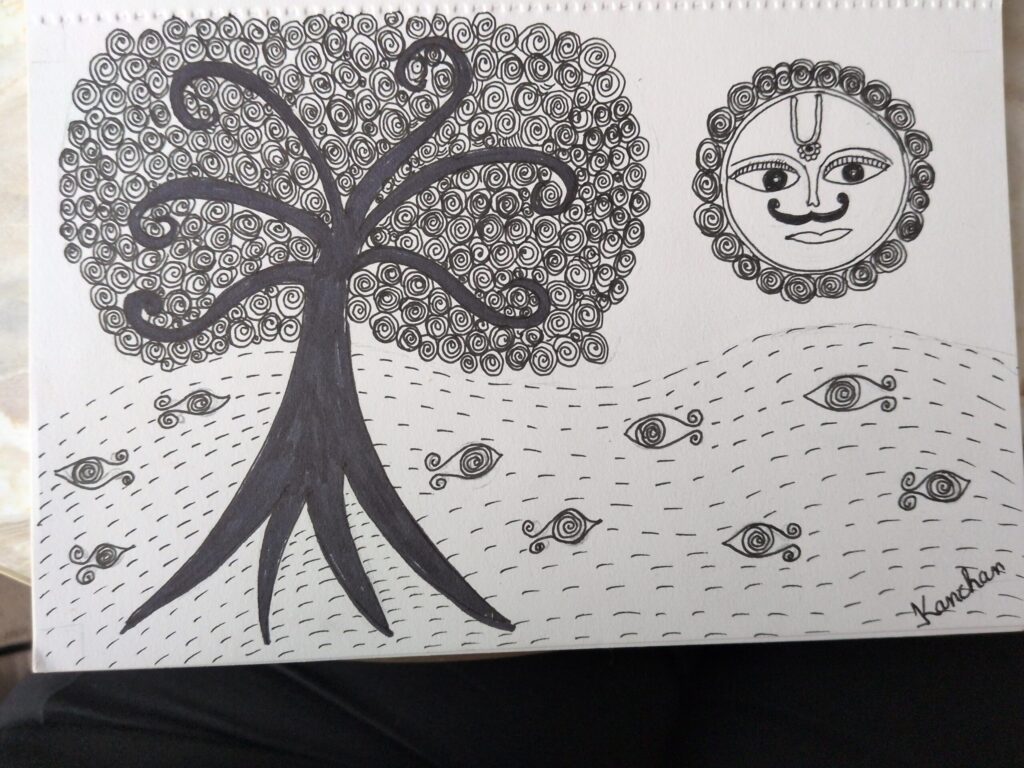
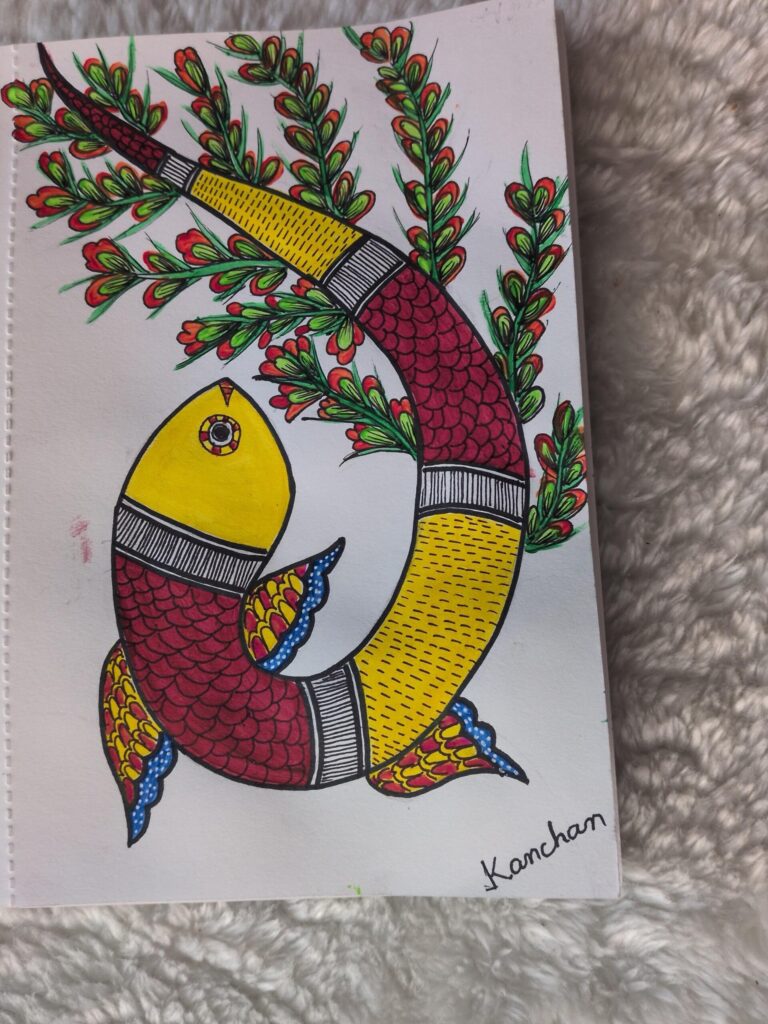
In nature where fish, trees, plants, rivers, and the sun lives in harmony and balance one another.
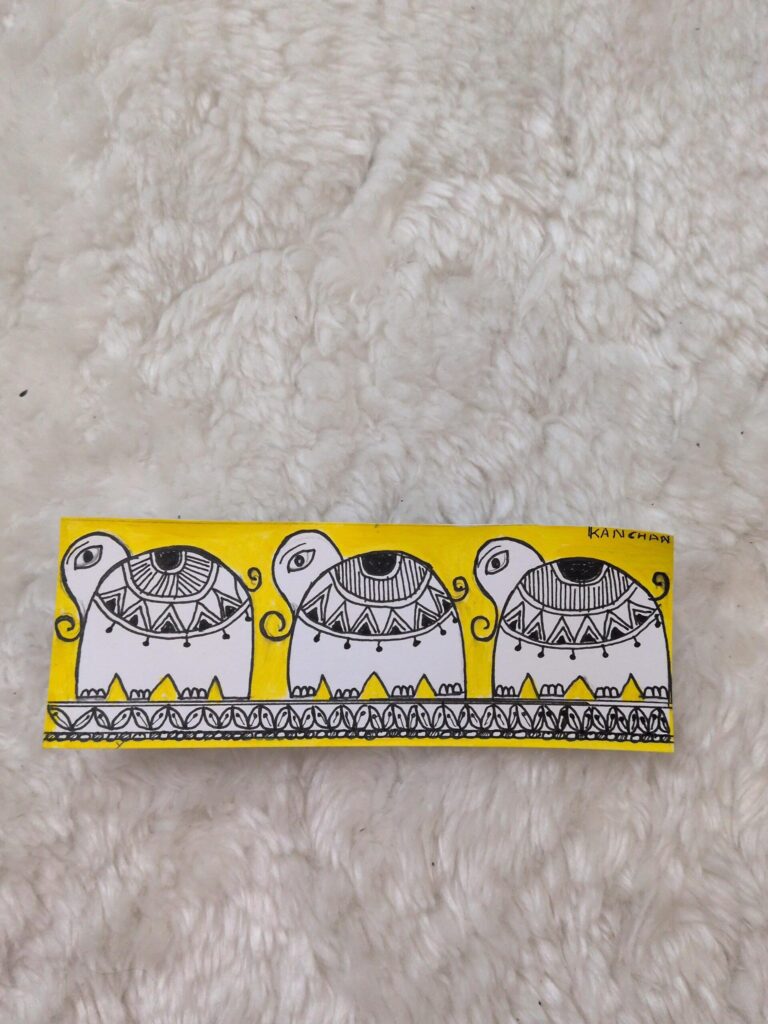
Painting in Madhubani design

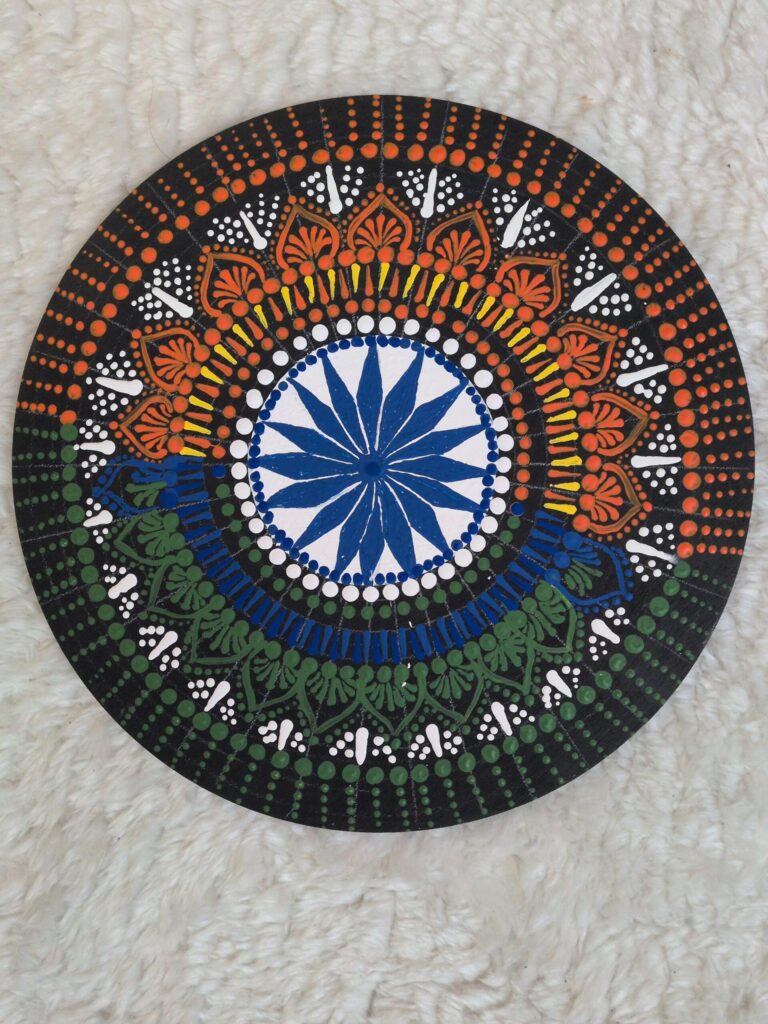
The quit India movement was launched by Mahatma Gandhi on Aug 8, 1942 at the Bombay Session of the All-India Congress Committee. Gandhi gave a famous “Do or Die” speech, demanding an immediate end to British rule in India. It became a major turning point in India’s freedom struggle.

The use of lotus in Madhubani paintings has special significance as they bring energy, good luck and good fortune. Lotus Flowers are often used for religious ceremonies and decorations.
Lotus blooms in murky ponds, yet its petals are pristine and beautiful, hence the lotus is often considered as a symbol of purity.
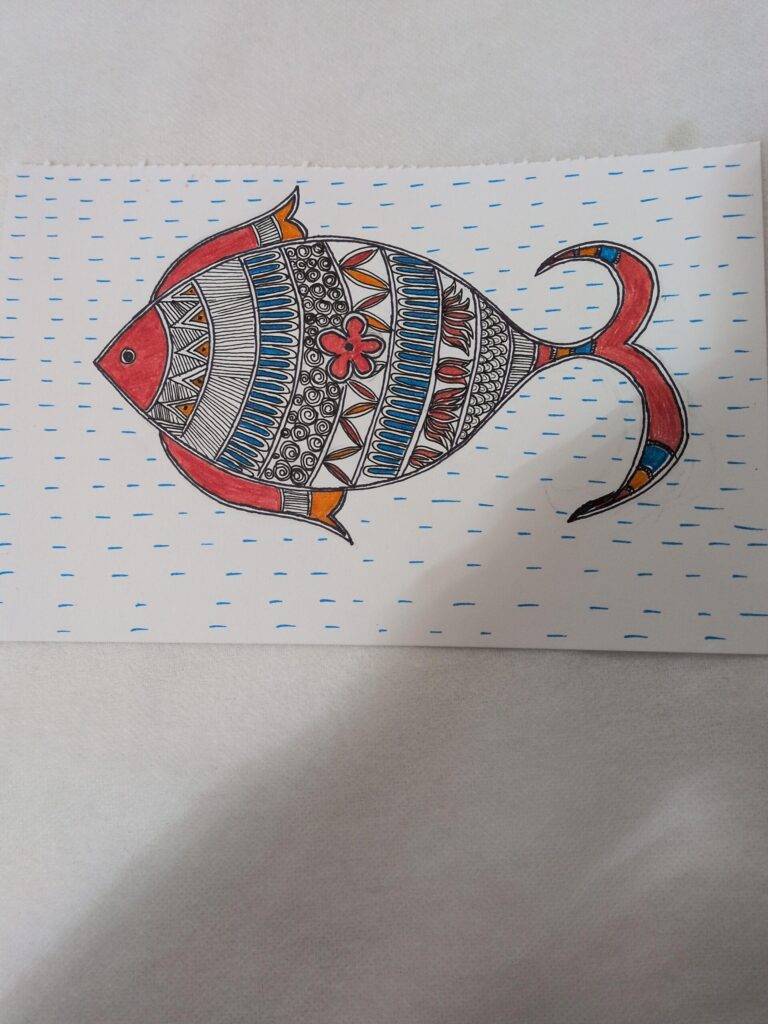
Madhubani art is from Mithila region Bihar in India. Intricate patterns are the highlights of the Madhubani paintings. This art focuses on the life of villages, rituals, festivals and the relationship with the nature.

A Rajasthani man in a vibrant turban and a large curled moustache is a timeless symbol of honor, pride, courage and high social standing rooted in the historic warrior heritage of Rajputana.
Rajasthan is India’s largest state by area and is dominated by the Thar desert. This turban protects them against the blistering desert Sun and dust.